





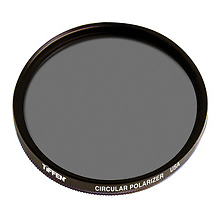
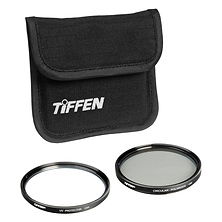


Why Circular Polarizer Filters Matter
A circular polarizer filter is one of the most powerful optical tools in photography. Unlike protective or UV filters that passively shield your lens, a polarizing filter actively transforms the light entering your camera by reducing reflections, boosting color saturation, and deepening blue skies. Whether you're photographing landscapes, water scenes, or architectural details, a quality circular polarizer gives you control over contrast and color that post-processing alone provides.
Circular polarizers work by selectively blocking polarized light, the wavelengths that bounce off water, glass, metal, and other reflective surfaces. When you rotate a polarizing filter, you control how much of this reflected light reaches your sensor. This gives you real-time adjustment of reflections and color saturation without any digital filters or editing tricks.
Most photographers use circular polarizers to achieve three core benefits. First, they eliminate surface reflections from water, revealing depth and detail that would otherwise appear as flat glare. Second, they increase color saturation across the entire scene, making greens richer and skies more vivid. Third, they darken blue skies at specific angles to the sun, creating dramatic contrast between sky and clouds that instantly improves landscape compositions.
How Circular Polarizers Differ from Linear Polarizers
The difference between circular and linear polarizers matters significantly for digital photographers. A linear polarizer blocks polarized light in one direction only, which works fine for manual focus film cameras but causes autofocus and metering problems on modern digital cameras. Your autofocus may struggle to lock onto subjects, and your exposure meter may overcompensate, resulting in images that are darker or lighter than intended.
Circular polarizers solve this problem by adding a retarder layer that converts linearly polarized light into circularly polarized light after the initial polarization stage. This extra layer preserves all the polarization benefits while allowing your camera's autofocus and metering sensors to receive uninterpreted light. Result: your autofocus locks instantly, exposure stays accurate, and you get the full optical advantages of polarization.
- Linear polarizers work best on manual focus film cameras
- Can interfere with digital autofocus and metering systems
- Circular polarizers are designed specifically for digital cameras with autofocus and TTL metering
- All modern digital camera users should use circular polarizers, never linear polarizers
Understanding Light Loss and Exposure
All circular polarizers reduce the amount of light reaching your sensor. At maximum polarization effect, expect approximately 1 to 1.5 stops of light loss depending on filter quality and current lighting conditions. This means a scene metered at 1/250 at f/5.6 may require adjusting to 1/125 at f/5.6 to maintain the same exposure.
Some photographers use this light loss strategically. In bright midday sunlight, that extra stop of darkness can help you maintain a wider aperture for excellent subject isolation, or a slower shutter speed for motion blur effects in water and clouds. Your camera's TTL metering automatically compensates for the filter's presence, so exposure stays accurate without manual adjustment in most shooting situations.
Filter Types and Mounting Options
Standard screw-in circular polarizers mount directly to your lens using the filter thread and are available in all common sizes. Slot-in systems using larger glass elements and metal frames provide optical advantages for professional work but require additional Filter Accessories and holders.
For photographers with multiple lens sizes, consider variable-width systems that let you attach a single circular polarizer to lenses with different thread sizes using step-up or step-down rings. This approach reduces the number of filters you own and simplifies gear management. Protect your collection with Filter Pouches & Cases to keep filters organized and safe when traveling.
Frequently Asked Questions
What is the difference between circular and linear polarizers?
Linear polarizers contain a single polarization layer that blocks light waves vibrating in one direction. They work well with manual focus film cameras but interfere with digital camera autofocus and metering systems. Circular polarizers add a retarder layer after the initial polarization stage, converting the light to circular polarization. This conversion preserves the polarization benefits while allowing your digital camera's autofocus and metering sensors to function normally. All modern digital camera users should use circular polarizers, not linear polarizers.
How much light does a circular polarizer lose?
Circular polarizers typically reduce light by 1 to 1.5 stops at maximum polarization effect. This depends on the filter quality, the specific filter design, and the angle of rotation. A 1-stop loss means you might adjust from 1/500 at f/5.6 to 1/250 at f/5.6. Your camera's TTL metering automatically compensates, so you don't need to manually calculate exposure adjustments in most situations. Some photographers intentionally use this light loss to achieve slower shutter speeds for motion blur effects in water and clouds.
Will a circular polarizer work with my digital camera?
Yes. Circular polarizers are specifically designed for digital cameras with autofocus and through-the-lens metering. The retarder layer converts linearly polarized light into circularly polarized light, which doesn't interfere with your camera's autofocus sensors or exposure metering. Your autofocus will lock quickly and accurately, and your exposure will remain correct. If you use a linear polarizer on a digital camera, you may experience autofocus hunting and exposure metering errors.
What size circular polarizer do I need?
Circular polarizers are available in standard screw-mount sizes from 37mm through 95mm. Check your lens barrel for the filter thread size, usually marked with a circle and number (for example, 58mm or 77mm). If you own multiple lenses with different thread sizes, consider purchasing a larger filter with step-down rings to use it across several lenses, or purchase a filter for each lens size. Avoid over-stepping down to smaller sizes, as this risks vignetting on wide-angle lenses.
Shop Circular Polarizer Filters at Samy's Camera
Circular polarizer filters are fundamental tools that belong in every photographer's kit. Whether you're exploring landscape photography, capturing reflective surfaces, or controlling color saturation and contrast in bright sunlight, a quality circular polarizer delivers optical results that post-processing alone provides. We carry a comprehensive selection of circular polarizers from trusted brands in all standard filter sizes and price points.
Explore our Lens Accessories collection to find circular polarizers and compare options for your specific lens kit. Ready to take control of reflections, colors, and sky contrast? Browse our selection online or visit a Samy's Camera location to see filter samples and get expert guidance on selecting the right size and quality level for your shooting style.