










LED Lights and Kits for Professional Video and Photography
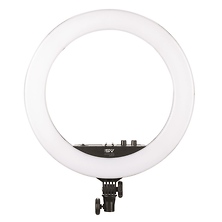
LED lights deliver consistent, adjustable illumination for video production, studio photography, content creation, and live streaming. Unlike traditional tungsten or fluorescent fixtures, LED panels convert energy efficiently into light with minimal heat output, allowing photographers and videographers to work comfortably in smaller spaces and position lights closer to subjects without discomfort.
Types of LED Lights
LED lighting comes in several configurations to match different shooting scenarios and creative requirements. Understanding the options helps you select the right fixtures for your workflow.
Bi-Color LED Panels
Bi-color LED panels allow you to adjust color temperature between tungsten (approximately 3200K) and daylight (approximately 5600K), making it straightforward to match existing ambient light or create specific looks. This flexibility eliminates the need to carry separate warm and cool fixtures.
RGB and RGBWW LED Lights
RGB LED lights expand beyond white light to include the full color spectrum for creative effects, background coloring, and accent lighting. RGBWW models add dedicated warm and cool white LEDs alongside the RGB elements, providing better output and color accuracy when you need standard white light.
LED Tube Lights
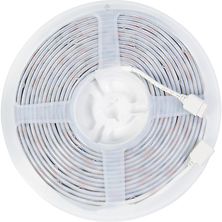
Tube lights create linear lighting effects that panels and COB fixtures cannot replicate. These elongated fixtures work well for edge lighting, rim lighting, and adding color accents to backgrounds. Many tube lights feature pixel control for animated effects like flowing gradients and color chasing.
COB LED Fixtures
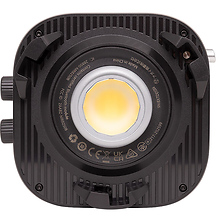
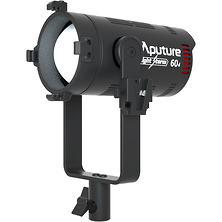
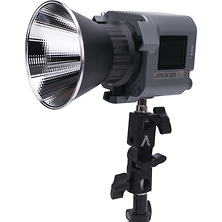
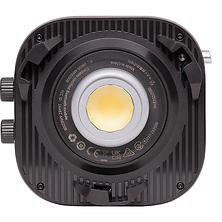
COB (Chip on Board) LED lights concentrate multiple LED chips into a single high-output point source. These fixtures typically range from 60W to 300W and accept standard Bowens mount modifiers, making them compatible with softboxes, beauty dishes, and other light shaping tools.
Key Specifications for LED Lighting
When selecting LED lights, several specifications determine performance and suitability for professional work.
- CRI (Color Rendering Index): Ratings above 95 ensure accurate color reproduction for skin tones and products
- TLCI (Television Lighting Consistency Index): Measures how colors appear on camera, with ratings above 95 preferred for video
- Color Temperature Range: Bi-color lights typically span 2700K to 6500K, with some extending to 2500K-8500K
- Wattage: 60W-150W suits home studios and small spaces; 200W-300W handles larger environments
- Beam Angle: Broader angles illuminate larger areas while narrower angles provide focused output
- Power Options: Many LED lights operate on AC power, battery, or both for location flexibility
LED Lighting for Different Applications
The versatility of LED lighting makes it suitable across photography and video disciplines.
Video Production and Filmmaking
Filmmakers and video producers rely on LED panels and COB lights for key, fill, and accent lighting. The ability to adjust color temperature on set matches practical light sources without gels. Silent operation eliminates fan noise that could interfere with audio recording.
Studio Photography
Portrait and product photographers use LED lights for their continuous output, which shows exactly how the final image will look before capture. This what-you-see-is-what-you-get approach simplifies lighting setups, especially for photographers transitioning from strobe work.
Content Creation and Streaming
YouTubers, podcasters, and live streamers benefit from compact LED panels that fit on desks and in small rooms. Battery-powered options provide mobility for on-location vlogging without the need for AC power access.
Interviews and Corporate Video
Interview setups require soft, flattering light that maintains consistency throughout extended recording sessions. LED panels with high CRI ratings ensure subjects look natural on camera while drawing minimal power for location shoots.
Choosing the Right LED Lighting Kit
LED lighting kits bundle multiple fixtures with light stands and accessories for complete setups. Entry-level kits include two or three panels with stands and carrying cases, providing everything needed to illuminate interviews, product shots, or talking-head videos. Professional kits add higher-output fixtures, V-mount battery plates, and advanced control options for demanding production environments.
LED Light Accessories and Modifiers
Softboxes, grids, and barndoors shape LED output to match your creative vision. Barn doors control spill and direct light precisely. Softboxes and diffusion panels soften hard shadows for more flattering illumination. Grids narrow the beam angle to create dramatic separation between subject and background.
Who Uses LED Lighting
Professional cinematographers use LED fixtures on film and commercial sets where color accuracy and output control are essential. Corporate video teams rely on LED kits for efficient location shooting at offices and events. Portrait photographers appreciate the ability to see lighting effects in real time before capturing the image. Content creators find LED lights practical for home studios where heat output and power consumption matter.
Educational videographers, real estate photographers documenting interiors, and event production teams all benefit from LED lighting's combination of quality, efficiency, and control. The technology scales from compact on-camera lights to powerful studio fixtures, addressing needs from solo creators to full production crews.
Frequently Asked Questions
What CRI rating should I look for in LED lights?
For professional photography and video work, select LED lights with a CRI rating of 95 or higher. This ensures accurate color reproduction, particularly for skin tones and product photography. TLCI ratings of 95 or higher indicate strong performance specifically for video applications.
How much wattage do I need for video lighting?
Wattage requirements depend on your space and shooting conditions. Home studios and small interview setups typically work well with 60W to 150W fixtures. Larger spaces or situations requiring lights to overpower ambient daylight may need 200W to 300W or more.
What is the difference between bi-color and RGB LED lights?
Bi-color LED lights adjust between warm and cool white light (typically 3200K to 5600K), making them ideal for matching natural or artificial ambient lighting. RGB LED lights add the ability to produce colored light across the full spectrum for creative effects and accent lighting.
Can LED lights be used with modifiers like softboxes?
COB LED lights with Bowens mount compatibility accept the same softboxes, beauty dishes, and modifiers used with strobe lighting. Panel lights often include mounting points for proprietary softboxes designed to fit their rectangular shape.
Do LED lights work on battery power?
Many LED lights support battery operation for location shooting without AC power access. Compact panels often use built-in rechargeable batteries or standard camera batteries. Larger COB fixtures may accept V-mount or Gold mount batteries for extended runtime on set.
Shop LED Lights and Kits at Samy's Camera
LED lights deliver the control, efficiency, and color accuracy that professional photographers and videographers depend on. From compact panels for content creation to high-output COB fixtures for studio and location work, Samy's Camera carries LED lighting solutions for every production need. Fast shipping, expert support, and a complete selection of studio and lighting equipment help you build the lighting setup that matches your creative vision.